
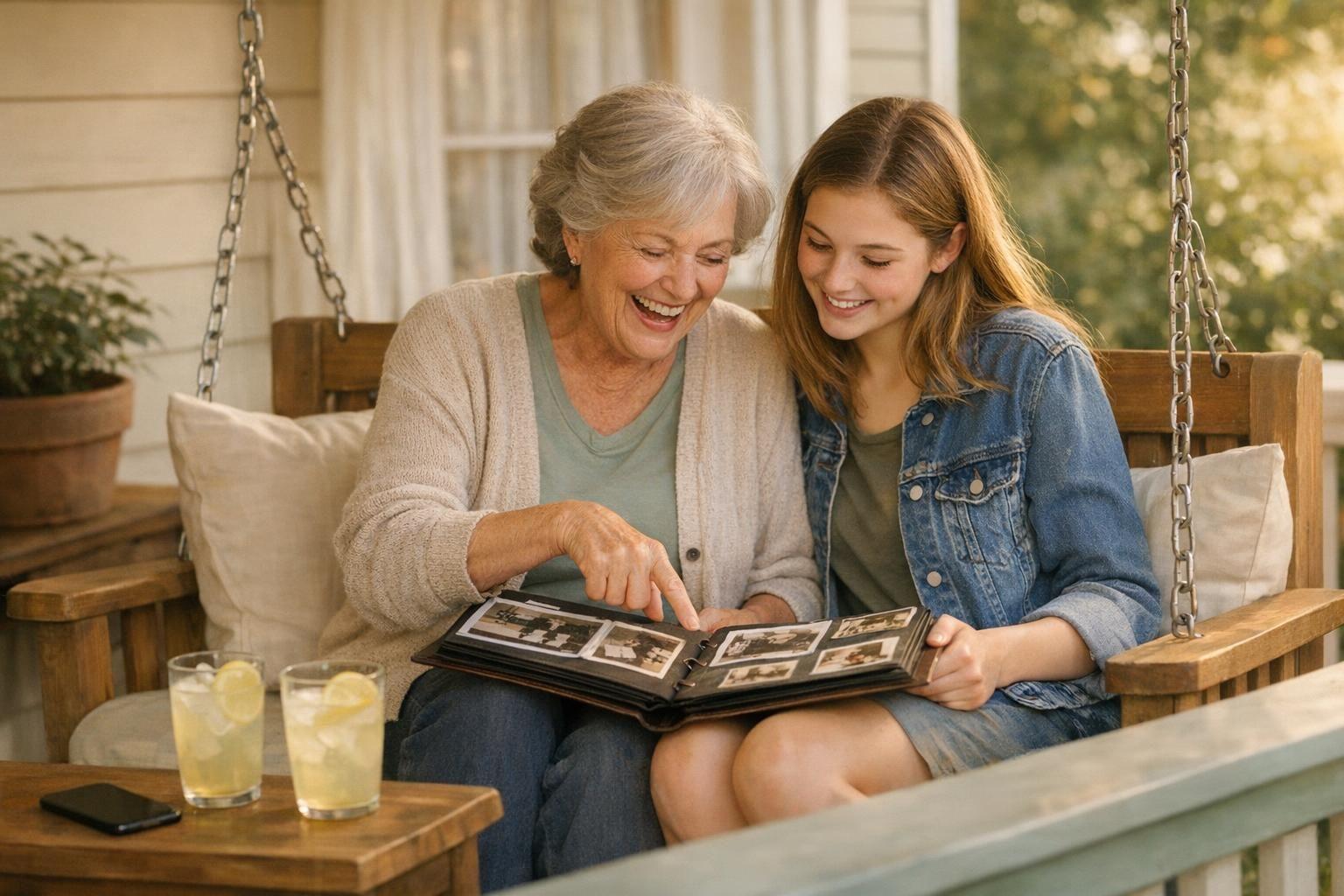
What questions should you ask your grandparents about their life?
The best questions to ask your grandparents are open ones about specific times, places and people: What was your house like growing up? How did you two meet? What was your first job? Ask one or two per visit, follow the details they bring up, and ask before you record. Below are more than 50 questions, grouped by stage of life.
Many grandparents have stories the family has never heard, simply because nobody asked. A good question over coffee or on a Sunday phone call is often all it takes to hear about the farm, the first apartment or the first car. Below are questions grouped by stage of life, and some advice on asking them so the answers turn into stories.
How to ask so the stories come
- Ask open questions. FamilySearch, the family history organization, advises skipping yes-or-no questions in favor of ones that invite your grandparents to share what they remember. "Did you like school?" gets a yes. "What was your walk to school like?" gets a story.
- Follow the details. FamilySearch also suggests building on what your grandparent tells you instead of checking questions off like a list. If Grandpa mentions a dance hall, ask about the dance hall. The question you planned can wait for next time.
- Ask one or two questions per visit. A good answer can take an hour, so save the rest for the next call.
- Say why you're asking. "I'd love to know what you were like at my age" is an easy way in.
- Bring something to look at. An old photo, a map or a recipe card gives you both something to point at.
- Let them skip a question. If they change the subject, follow them there.
If you live far apart, a video call works well, and our guide to staying close when family lives far away has more ideas. If you want an occasion, National Grandparents Day falls on the first Sunday in September after Labor Day.
Questions to ask your grandparents about growing up
StoryCorps, which records and collects conversations, has a list of questions for grandparents that includes "What was your childhood like?" and "Do you remember any of the stories your grandparents used to tell you?" These go further:
- Where did you grow up, and what did the house look like?
- What was your neighborhood like, and who lived next door?
- Who lived with you, and who did you share a room with?
- What did you eat on an ordinary weeknight?
- What games did you play outside, and with whom?
- What chores did you have?
- Who was the funniest person in your family?
- What did you get in trouble for?
- What was the first thing you bought with your own money?
- What was a holiday like when you were small?
School, work and first jobs
- What was your school like, and how did you get there?
- Which teacher do you still think about, and why?
- What were you good at in school, and what did you dread?
- What did you want to be when you grew up?
- Did you ever skip school, and did anyone find out?
- What was your first job, and what did it pay?
- What did you buy with your first paycheck?
- Who taught you the most at work?
- Which job are you proudest of?
- If you served in the military, what would you like us to know about that time?
Love, marriage and friendship
StoryCorps suggests asking "How did you and grandma/grandpa meet?" Couples often have a version they love to tell, and sometimes two that don't quite match.
- What was your first date like?
- How did you know this was the person for you?
- What did you do on a Saturday night when you were 20?
- What music did you dance to?
- What do you remember about your wedding day?
- Who was your best friend when you were young, and are you still in touch?
- What makes a friendship last?
Raising a family
- What do you remember about the day my mom or dad was born?
- What was my mom or dad like as a kid, and what did they get in trouble for?
- Where did you live when the kids were small, and what was the neighborhood like?
- What did the family do on vacation?
- Which family traditions started with you?
- What was the hardest part of raising children back then?
- What did a normal Sunday look like when the kids were young?
How the world has changed
- What did a loaf of bread or a gallon of gas cost when you were young?
- When did your family get its first TV or telephone?
- Where were you when you heard about the moon landing, or other big news?
- Which invention made the biggest difference in your life?
- What do you miss about how things used to be?
- What's better now than when you were young?
- How was your town different from how it is today?
Advice and what they're proud of
- What are you proudest of?
- What's the best advice anyone ever gave you?
- What would you tell me about choosing a job, or a partner?
- Which year of your life would you like to live again, and why?
- What do you hope our family keeps doing?
- What's something about you that would surprise me?
- What do you wish you had learned sooner?
- What are you looking forward to?
Keeping the answers
Ask before you record, and say what the recording is for. FamilySearch suggests recording a video or a voice memo on your phone, or writing your grandparents' answers down. Afterward, type up the best stories and send them around the family, with a photo for each one.
Your grandparent can also tell their stories in their own time. Elsy is an AI companion for older adults that they talk with by voice on their phone. When they tell her about the past, she writes it up after the conversation as a short story, with their own words as quotes. Now and then her daily question asks about a memory from long ago. When a story is ready, they can send it to the family, and everyone in their circle can read it and listen to it, with short excerpts of their own voice from the conversation. Reading the stories they share is free for family. You can see how Life stories work on our site.
If your grandparent would like to write the stories down themselves, share our guide on how to write your life story, which is written for them.
Frequently asked questions
What are good questions to ask your grandparents?
Open questions about specific moments: "What was your first job?", "How did you meet Grandma?", "What did you do on summer afternoons as a kid?" They lead to stories, not one-word answers.
What should I ask my grandma about her childhood?
Ask about the house she grew up in, who lived there, what she ate, what she played and what she got in trouble for. Then follow whatever she seems to enjoy talking about.
How do you interview a grandparent for a family history project?
FamilySearch suggests telling the person why you're doing it, what kind of information you'd like and what to expect. Prepare a few open questions, but let the conversation wander. Write down names, places and dates to check later, and ask before you record.
Should I record the conversation?
If your grandparent agrees, yes. A voice memo on your phone is enough, and you'll keep their exact words. Some people talk more freely without a phone on the table, so notes are fine too.
What if my grandparent doesn't want to talk about the past?
Respect that. Some memories are hard, and some people are private. Try a lighter question another day, ask about a photo, or ask for their advice instead. Talking while you cook or sort photos together can also make it easier.
How can I save my grandparents' stories for the family?
Record or write them down, then share typed copies. Some families use a life story service, and you can read about how a life story service benefits your family. If your grandparent talks with Elsy, she writes up the stories they tell her, and they can send each one to everyone in their circle.
How to get started
- On your next visit, install Elsy from the App Store or Google Play on your grandparent's phone or tablet, together.
- Show them the Talk button and suggest a first story, like their first job.
- When the story is ready, they can send it to the family with Send to family at the end of the story.
See how Elsy works step by step. Try Elsy free for 3 days on their own phone.
This is general information, not medical advice. Every situation is different, so talk to a doctor about yours.