
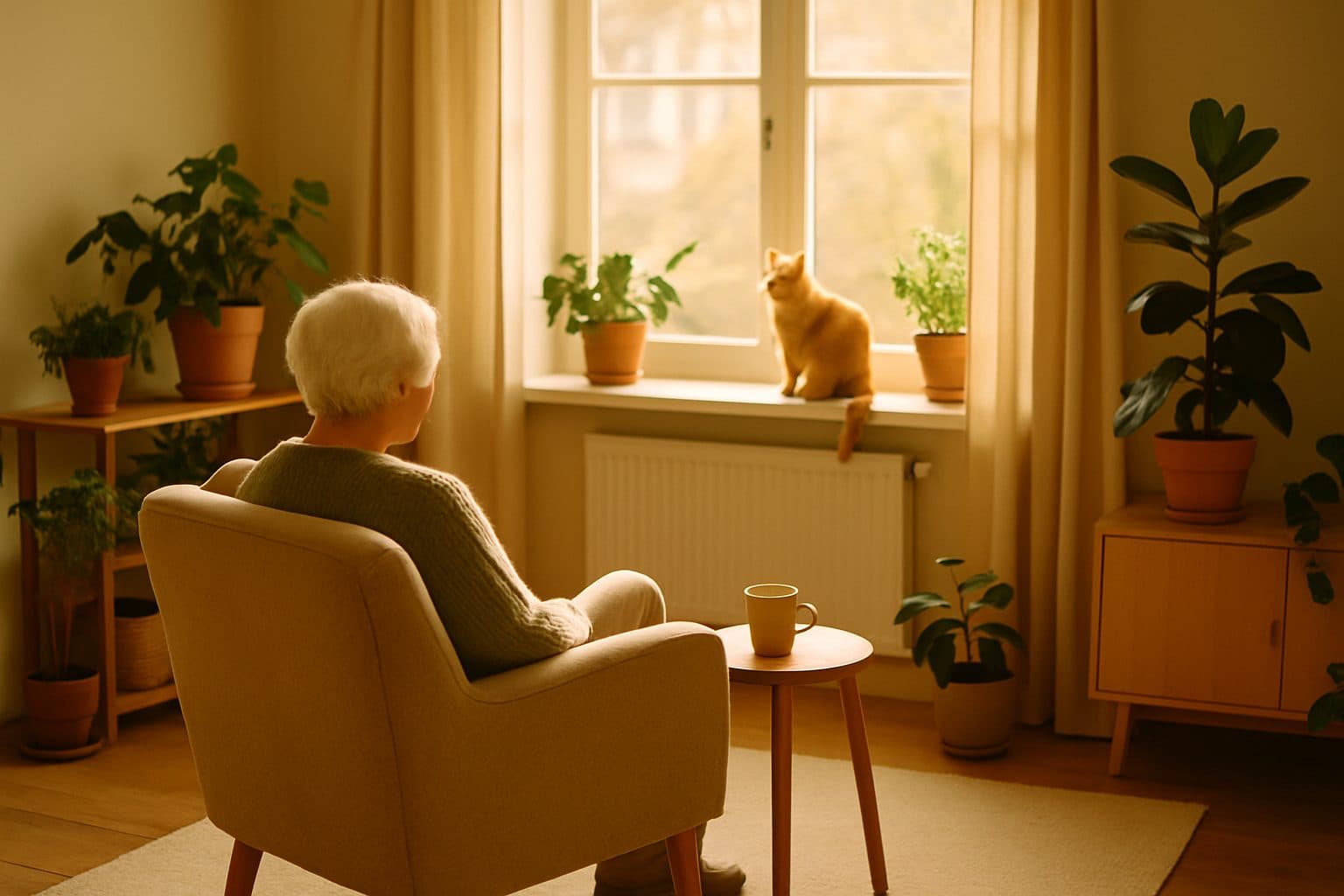
What helps when you live alone as you get older?
Structure in your days, a home set up to prevent falls, regular plans with other people, and a clear agreement about who calls whom, and when. About a quarter of Americans 65 and older live alone, and most manage well. The aim is an everyday life that holds up, even when something goes wrong.
Plenty of people live alone as they get older. In the US, 26 percent of adults aged 65 and older lived alone in 2023, according to Pew Research Center, and in the UK, 4.3 million people over 65 live alone. Most manage well and value the freedom. But living alone takes a little more planning, because there isn't automatically someone around to notice if something slips.
Make your home work for you
The biggest physical risk is falling. According to the CDC, more than one in four older adults falls each year, and falling once doubles your chances of falling again. Most of the prevention is very practical:
- Clear loose rugs and cords from walkways, and make sure there's good lighting, including at night on the way to the bathroom.
- Put non-slip mats in the bath or shower, and consider grab bars by the shower and toilet.
- Exercise that builds strength and balance is the best-documented way to prevent falls. A Cochrane review found that it cuts the number of falls by about a quarter.
- Tell your doctor if you've had a fall, even if you weren't hurt, so the cause can be found.
Build regular contact into your week
When you live alone, contact doesn't always happen by itself, so it has to be built into everyday life. That might be a call on set days, a neighbor you've swapped numbers with, or a regular activity outside the home. Many families make a simple agreement: "We talk on Tuesdays and Fridays, and you let us know if anything changes." It gives peace of mind at both ends, without anyone feeling supervised.
Some people also use technology to stay in touch: an app where the family can follow along a little with everyday life, or a voice assistant you can ask to get hold of someone. Choose the level you're comfortable with. What matters is that you're the one who decides.
Use the checks that are available
Ask your doctor to check your risk of falling, as the CDC recommends. In the US, Medicare's yearly wellness visit includes a review of your safety, including your risk of falls and safety at home. In the UK, your GP can check your balance and refer you to a specialist falls service if needed. The CDC's free Check for Safety checklist takes you room by room through your home to find and fix hazards.
Speak up early
Perhaps surprisingly, the best thing you can do to stay independent is to ask for help early. Small problems left to grow end up costing you more freedom than the help that could have solved them. Saying "this has become difficult" is a way of staying in your own home on your own terms.
This is general information, not medical advice. Every situation is different, so talk to a doctor about yours.
Sources
- Pew Research Center: A smaller share of older U.S. adults live alone today than in 1990
- ONS: Families and households in the UK, 2024
- CDC: Facts About Older Adult Falls
- CDC: Preventing Falls and Hip Fractures
- Cochrane: Exercise for preventing falls in older people living in the community
- US Code of Federal Regulations (42 CFR 410.15): Medicare annual wellness visits
- NHS: Falls
- CDC STEADI: Check for Safety, a home fall prevention checklist for older adults