
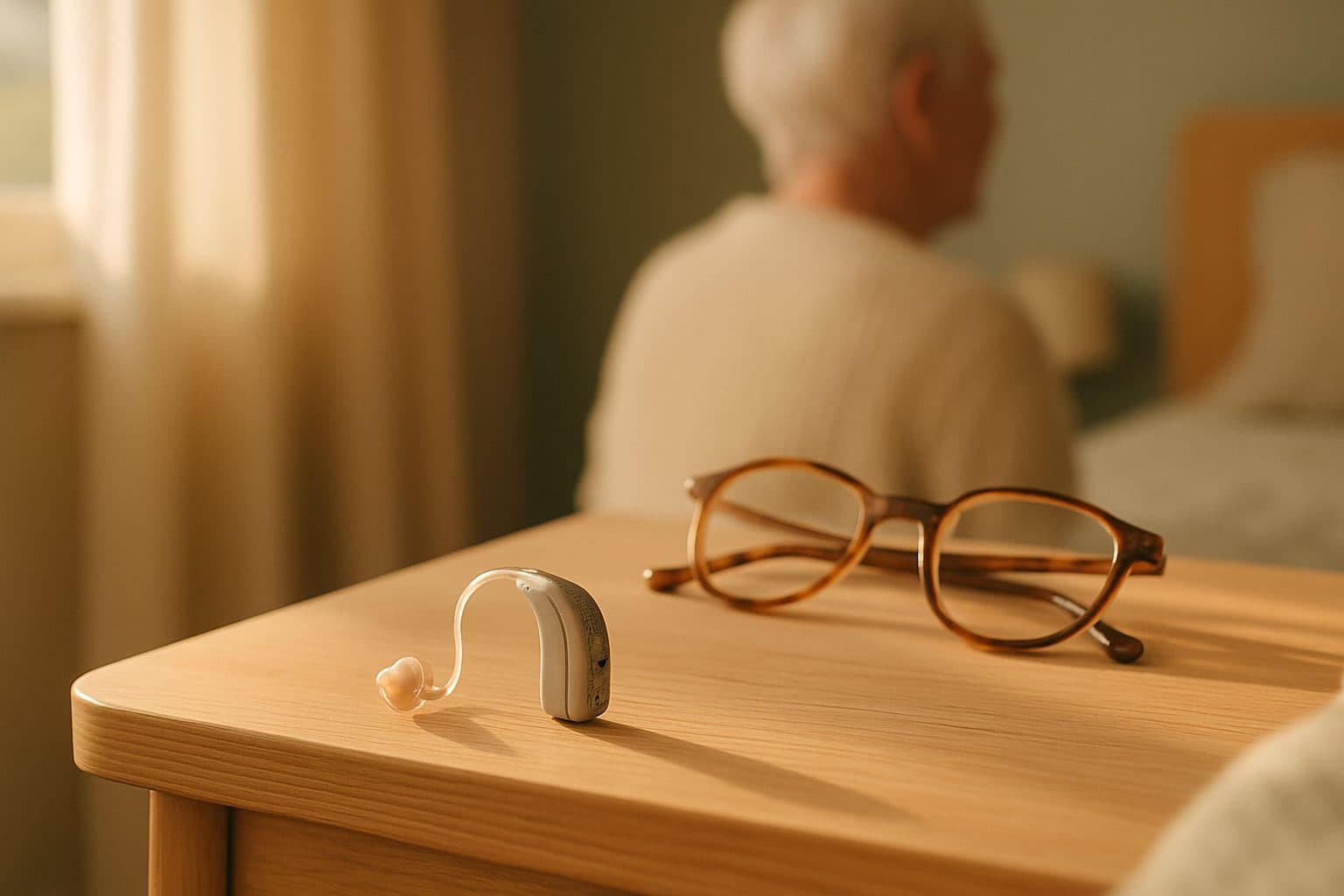
Does hearing loss affect the brain?
Yes, a great deal. According to the Lancet Commission's 2024 report, untreated hearing loss is one of the largest risk factors for dementia that can be changed, and a large randomized trial found that hearing aids markedly slowed cognitive decline in older adults at higher risk. So your hearing matters for your brain too.
Hearing loss is often treated as an inconvenience: annoying when you have to ask people to repeat themselves, but rarely dangerous. Research in recent years has changed that picture.
What the research shows
The Lancet Commission, which brings together international research on dementia, names untreated hearing loss as one of the two largest risk factors for dementia that can be changed, alongside high cholesterol in midlife. Its 2024 report also concludes that the evidence for the benefits of treating hearing loss has grown stronger.
The clearest result comes from the American ACHIEVE study, published in The Lancet in 2023. Almost 1,000 adults aged 70 to 84 with mild to moderate hearing loss were randomly split into two groups, one of which got hearing aids and help getting used to them. Among participants at higher risk, cognitive decline over three years was 48 percent slower in the hearing aid group. Among the healthiest participants, there was no clear difference after three years, so hearing aids are no miracle cure. But for those with the most at stake, the effect was large.
Why are hearing and the brain connected?
Researchers point to three mechanisms that probably work at the same time:
- The brain works overtime. When sound is unclear, the brain spends effort guessing, and that effort is taken away from memory and thinking.
- The brain gets too little to do. The hearing centers have less to work with, and connections that aren't used grow weaker.
- You withdraw. Conversations become tiring and social occasions draining, so there are fewer of them. That increases social isolation, which is a risk factor in its own right.
From noticing it to doing something about it
Hearing loss creeps up on you, and most people wait years before doing anything about it. The signs are familiar: the TV gets louder, "what did you say?" comes up more often, and conversations in noisy rooms become exhausting.
- Get a hearing test. It doesn't commit you to anything, and your doctor can refer you.
- Hearing aids are easier to get than they used to be. In the US, adults with mild to moderate hearing loss can buy hearing aids over the counter, without a prescription or a fitting. In the UK, the NHS provides hearing aids free of charge.
- Wear your hearing aid once you have one. The benefits, including for your brain, come with daily use, and getting used to it usually takes a few weeks.
- Don't forget your eyesight either. Untreated vision loss was added to the Lancet list in 2024. Your eyes and ears are how your brain takes in the world, so both are worth looking after.
This is general information, not medical advice. Every situation is different, so talk to a doctor about yours.
Sources
- The Lancet: Dementia prevention, intervention, and care (2024 report)
- CIICA: 2024 Update of Lancet Commission strengthens case for addressing hearing loss
- The Lancet: The ACHIEVE study (hearing intervention and cognitive decline)
- FDA: OTC Hearing Aids, What You Should Know
- NHS: Hearing aids and implants