
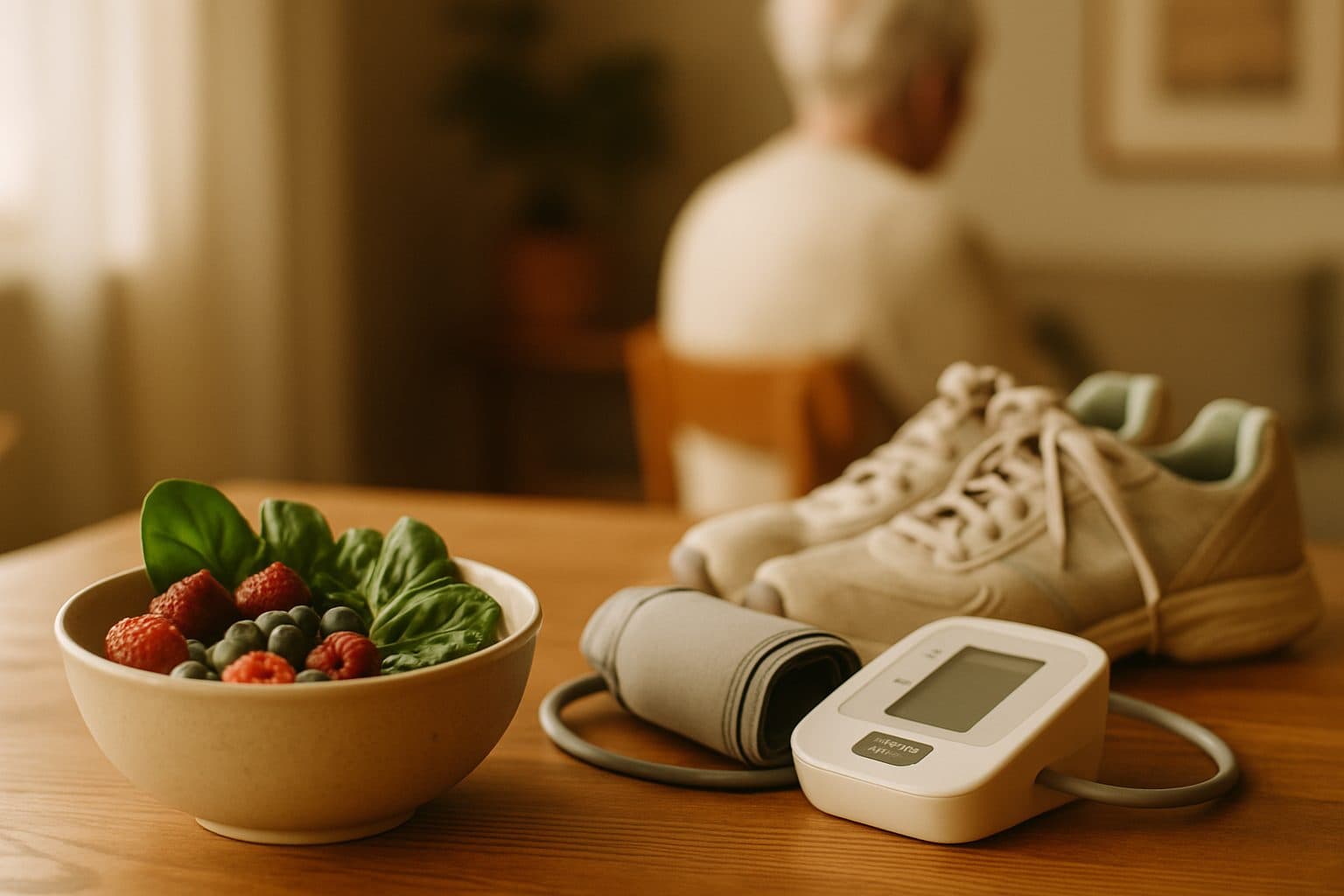
What does research say about preventing dementia?
According to the Lancet Commission (2024), up to 45 percent of dementia cases could potentially be delayed or prevented by tackling 14 known risk factors. Later in life, hearing, eyesight, blood pressure, exercise, smoking, alcohol and social contact matter most. There's no guarantee, but your risk is something you can influence.
There's no sure way to prevent dementia, and nobody should promise you otherwise. But in recent years, research has become much clearer about what affects the risk, and the numbers are bigger than most people think.
The 14 risk factors
The Lancet Commission, an international group of researchers that regularly reviews dementia research, updated its list in 2024 to 14 risk factors that can be changed. The commission's estimate: if all 14 were eliminated, up to 45 percent of dementia cases worldwide could potentially be delayed or prevented.
The factors span a whole lifetime, but several matter especially in later life:
- Untreated hearing loss (the largest single factor, together with high cholesterol)
- Untreated vision loss (new to the list in 2024)
- High blood pressure and high LDL cholesterol
- Physical inactivity
- Smoking and heavy drinking
- Social isolation and depression
- Diabetes and obesity
What the numbers mean, and what they don't
The 45 percent applies to whole populations. It isn't a guarantee for you as an individual: people who do everything right can still get dementia, and people who do nothing can be spared. What you can do is influence your own risk. And several of the factors are things your doctor can help with: blood pressure, cholesterol, hearing and eyesight can all be checked and treated.
A checklist to work from
The useful thing about the list is that almost everything on it is good for you for plenty of reasons besides dementia:
- Get your hearing and eyesight checked, and wear your hearing aid if you've been given one. Read more in our article on hearing and the brain.
- See your doctor about blood pressure and cholesterol. These are among the best-documented areas to work on.
- Move every day, and go easy on tobacco and alcohol.
- Keep your social life going. Loneliness and isolation are on the list alongside the physical factors.
- Keep your mind busy by learning and trying new things.
In other words, prevention mostly means an ordinary, active life, with a little extra attention to the things your doctor can measure. There's no special program to sign up for.
This is general information, not medical advice. Every situation is different, so talk to a doctor about yours.