
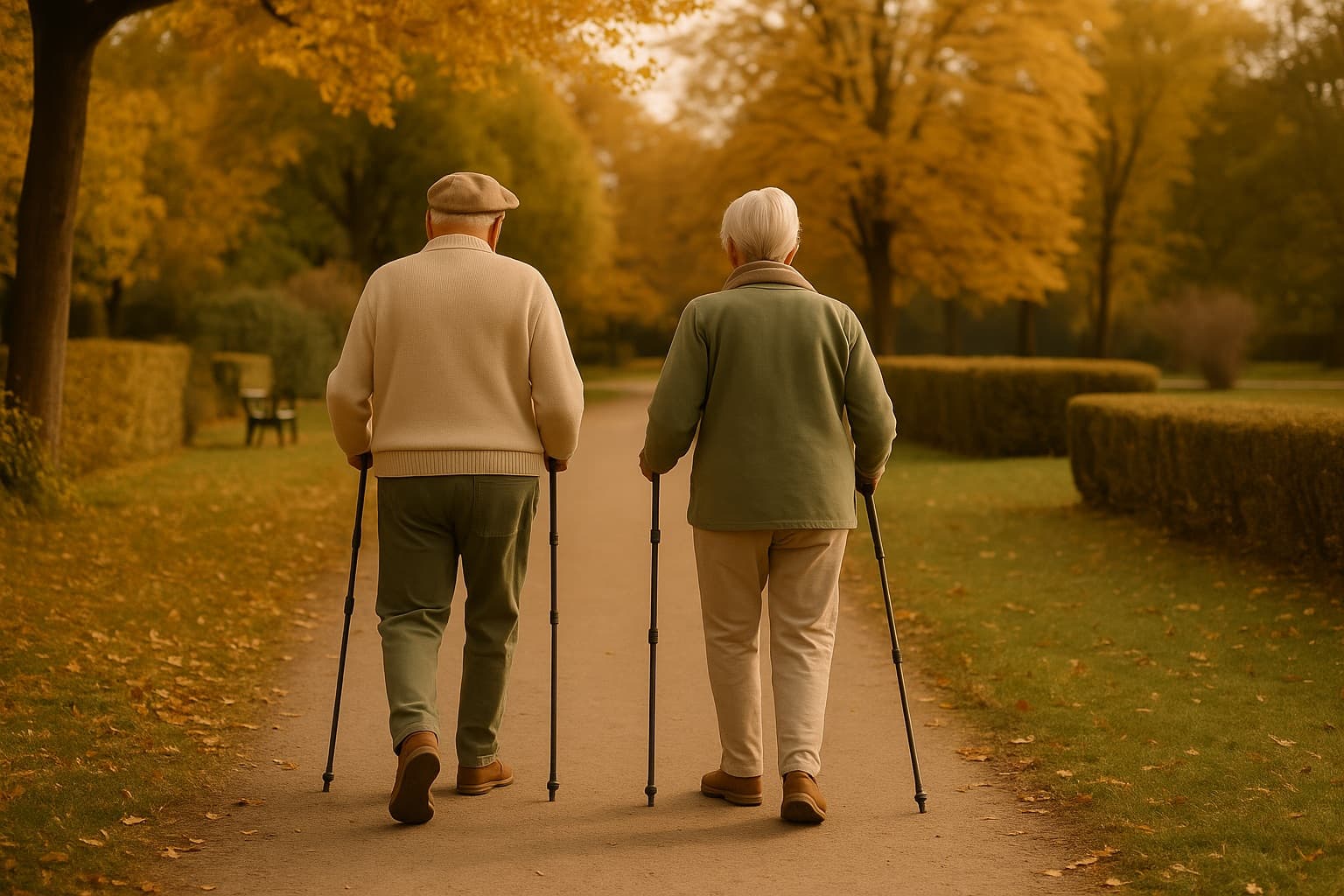
How much exercise do you need as you get older?
If you're over 65, the World Health Organization recommends at least 150 minutes a week of moderate activity that gets you a little out of breath, plus muscle-strengthening activities at least two days a week and balance and strength training at least three days a week. Some activity is always better than none.
Few habits do as much for you as you get older as regular exercise. It helps your heart, your mood, your balance and your sleep, and, it turns out, your memory too. Here are the official recommendations, and what they look like in practice.
The recommendations for adults over 65
- Be active for at least 150 minutes a week. That's about 30 minutes on five days. The pace should be moderate: you get a little out of breath but can still talk. If you work harder, so that talking gets difficult, half the time does the same job.
- Strengthen your muscles at least two days a week. Legs, hips, stomach, back and arms. You can use resistance bands, hand weights, your own body weight or heavier gardening.
- Train your balance at least three days a week, ideally together with strength exercises. This is the kind of training that helps prevent falls, and falls are the leading cause of injury death among adults 65 and older, according to the CDC.
- Cut down on time spent sitting. Get up regularly, on rest days too.
The minutes don't have to come all at once. Three ten-minute stretches count fully, and a brisk walk to the store is as good as anything done in workout clothes.
Exercise helps your memory too
A meta-analysis of 21 randomized studies with more than 1,400 older participants found that both aerobic and strength training led to measurable improvements on tests of memory and thinking compared with control groups. The effect isn't dramatic, but it's consistent, and it comes on top of all the other benefits. Physical inactivity is also one of the 14 risk factors for dementia on the Lancet Commission's list.
If you're starting from the couch
Perhaps the most important message in the guidelines is also the easiest to act on: some physical activity is better than none. If you're just getting started, begin gently and build up gradually in how long, how hard and how often you're active.
- Week 1: A ten-minute walk every day. No more.
- After that: Add five minutes at a time, and pick up the pace until you notice it in your breathing.
- Strength and balance at home: Stand up from a chair and sit down again ten times, stand on one leg while holding the kitchen counter, and rise up on your toes while the coffee brews.
- Do it with other people if you can. A regular walking partner or a class at your local senior center or community center helps with motivation and gives you company at the same time.
If you have a long-term health condition, or you're unsure what your body can handle, talk it over with your doctor first. The answer will almost always be encouragement to get going.
This is general information, not medical advice. Every situation is different, so talk to a doctor about yours.
Sources
- WHO: Guidelines on physical activity and sedentary behaviour
- British Journal of Sports Medicine: World Health Organization 2020 guidelines on physical activity and sedentary behaviour
- CDC: Older Adult Activity, an overview
- IJERPH: The Effects of Exercise for Cognitive Function in Older Adults (meta-analysis)
- The Lancet: Dementia prevention, intervention, and care (2024 report)
- CDC: Facts About Older Adult Falls
- CDC: About Older Adult Fall Prevention